.png)
What Does AppX Deployment Service (AppXSVC) Do in Windows?

Updated: Sep 20

Intro | AppX Deployment Service in Windows
If you’ve ever peeked into your Task Manager and noticed a background process called AppX Deployment Service (AppXSVC) eating up CPU or disk usage, you might have wondered: What is this service? And do I really need it running? In some cases, AppXSVC may appear to consume significant system resources, leading users to suspect a problem.
However, the reality is often more nuanced than it first appears. Let’s break it down in simple terms.
What is AppX Deployment Service (AppXSVC)?
The AppX Deployment Service (AppXSVC) is a Windows system service responsible for handling the installation, update, and removal of Microsoft Store apps (also known as Universal Windows Platform (UWP) apps).
Whenever You:
Install a new app from the Microsoft Store,
Update existing Store apps in the background, or
Remove an app, this service is the one doing all the heavy lifting.
In short, AppXSVC is like the installer/uninstaller manager for Store apps.
Why Does AppXSVC Run in the Background? ⚙️
Even if you don’t actively install apps from the Store, Windows often updates its built-in apps (like Mail, Calendar, or Microsoft Photos) in the background. AppXSVC ensures these updates happen smoothly.
That’s why you’ll see it running from time to time in your Task Manager, especially during updates.
How to Check if AppXSVC Is Running
If you're curious whether the AppX Deployment Service (AppXSVC) is currently active on your system, Windows provides several easy ways to check its status.
Using Task Manager
Press Ctrl + Shift + Esc to open Task Manager.
Click More Details if the simplified view is displayed.
Navigate to the Services tab.
Look for AppXSVC in the list of Windows services.
Check the Status column to see whether the service is running.
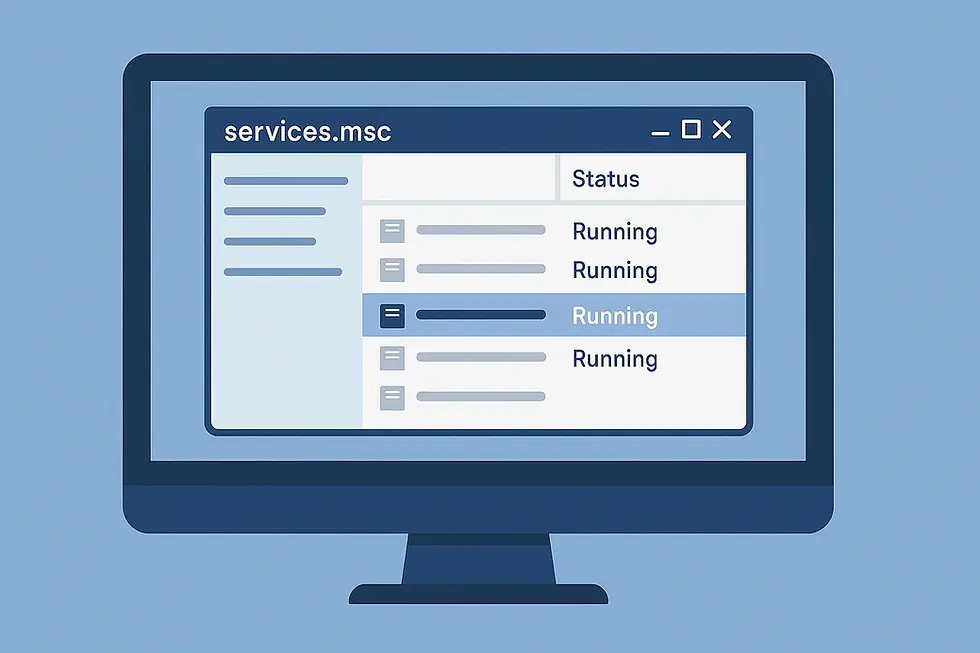
Using the Services App
Press Windows + R to open the Run dialog box.
Type services.msc and press Enter.
Scroll down and locate AppX Deployment Service (AppXSVC).
Double-click the service to view its status, startup type, and other configuration details.
These methods can help you quickly determine whether AppXSVC is active and functioning normally on your Windows system.
Can You Disable AppX Deployment Service?
Technically, you can disable it, but it’s not recommended. Here’s why:
Disabling breaks Microsoft Store apps: You won’t be able to install or update any apps from the Store.
Windows features may malfunction: Many built-in apps (Calculator, Mail, Calendar, etc.) rely on AppXSVC.
Security risks: Apps won’t receive security patches if updates are blocked.
So unless you never use Microsoft Store apps and are 100% sure you won’t need them in the future, it’s better to leave AppXSVC enabled.
Why is AppXSVC Using High CPU or Disk? 🖥️
Sometimes you might notice AppX Deployment Service consuming high CPU or disk usage.
This Usually Happens Because:
A Store app is updating in the background.
A Windows update triggered app updates.
A corrupted app package is stuck in the update process.
Most of the time, usage will drop once the update finishes.
How to Fix High Usage of AppXSVC
If AppXSVC keeps using resources abnormally, try these fixes:
Update Windows manually - Go to Settings > Windows Update and install pending updates.
Reset the Microsoft Store cache - Press Win + R, type wsreset.exe, and hit Enter.
Run SFC & DISM scans - These tools repair corrupted system files.
"Advanced users can also re-register Microsoft Store apps using PowerShell, but we don’t recommend this for beginners as it may cause system issues if commands are entered incorrectly."
How to Fix AppXSVC Problems
While AppXSVC usually works without issues, some users may experience high CPU usage, disk activity, or app installation problems. Try these troubleshooting steps if you encounter any issues.
Restart Your Computer
Temporary software glitches can sometimes affect Windows services. A simple restart may resolve minor AppXSVC problems and restore normal operation.
Clear the Microsoft Store Cache
A corrupted Store cache can interfere with app deployment services.
Press Windows + R.
Type wsreset.exe and press Enter.
Wait for the Microsoft Store cache reset process to complete.
Run the System File Checker (SFC)
Corrupted Windows system files can cause AppXSVC to behave unexpectedly.
Open Command Prompt as Administrator.
Run the following command:
sfc /scannow
Allow Windows to scan and repair any damaged system files.
Use the DISM Tool
If SFC cannot fix the issue, the Deployment Image Servicing and Management (DISM) tool may help.
Run the following commands in an elevated Command Prompt:
DISM /Online /Cleanup-Image /CheckHealth
DISM /Online /Cleanup-Image /RestoreHealth
Update Windows
Microsoft regularly releases bug fixes and performance improvements through Windows Update.
Open Settings > Windows Update.
Check for available updates.
Install any pending updates and restart your PC.
Reinstall or Re-register Microsoft Store Apps
If AppXSVC issues are linked to Microsoft Store applications, re-registering the Store may help resolve deployment errors.
Check for Malware
Although AppXSVC is a legitimate Windows service, malware can sometimes disguise itself as system processes. Running a full antivirus scan can help rule out security threats.
If AppXSVC continues to consume unusually high resources after trying these fixes, the issue may be related to a specific Microsoft Store app, Windows update, or system corruption that requires deeper troubleshooting.
Should You Disable It? ✅
No - you shouldn’t disable AppXSVC. It’s a core Windows service, and disabling it may cause more problems than it solves. If resource usage bothers you, use the fixes above instead of turning it off completely.

Key Takeaway 📌
The AppX Deployment Service (AppXSVC) is an essential Windows component that manages app installations and updates. While it may temporarily use resources, it’s not harmful - in fact, it’s crucial for keeping your apps updated and secure.
👉 If you don’t use Store apps at all, you can disable the Microsoft Store instead, but leave AppXSVC running for system stability.
Author: Kalyan Bhattacharjee
Category: Windows | Tech Tutorials | Tech Reviews & Guides | Digital Frameworks
Expertise: Technology Analyst & Digital Research Writer | 5+ Years of Experience
Source: Research-based content using publicly available technical resources and industry references
📚 Keep exploring - Here are more tech stories you’ll love:


Comments