.png)
How to Improve Brand Visibility in AI Search Engines


Let's Dive In | Improving Brand Visibility in AI Search Engines
Search is evolving as people increasingly use AI tools like Google AI Overviews, Google AI Mode, Microsoft Copilot, and ChatGPT to discover brands and make decisions. For businesses, AI search visibility means making their brand easier to discover, understand, and reference in AI-generated answers. Achieving this requires more than keywords or frequent publishing. Brands need helpful content, a consistent digital identity, and credible information across relevant online sources.
Strategies such as Generative Engine Optimization (GEO) and Answer Engine Optimization (AEO) can help businesses adapt to this changing search landscape and improve their chances of being discovered.
What Is Brand Visibility in AI Search Engines?
Brand visibility in AI search engines refers to how frequently and accurately a brand appears in AI-generated answers, recommendations, summaries, and source citations. For example, someone might ask an AI search engine to recommend reliable cybersecurity tools for small businesses. Instead of browsing several websites, the user may receive a summary naming a few products, explaining their features, and linking to supporting sources.
If your brand is mentioned or your website is cited in that response, you gain visibility even if the user never sees your page in a conventional search result.
AI search visibility can take several forms:
Brand mentions: Your company, product, or website is named in an AI-generated answer.
Source citations: Your content is linked as a source supporting an answer.
Product recommendations: Your product appears when users compare solutions or ask for recommendations.
Topical visibility: Your content is repeatedly referenced for questions within your area of expertise.
Branded discovery: Users learn about your company through AI answers and subsequently search for it by name.
These outcomes are related, but they are not interchangeable. A brand mention does not necessarily generate a website visit, and a citation does not guarantee a recommendation or sale.
How Do AI Search Engines Discover and Select Brands?
AI search systems can combine information from their underlying knowledge, search indexes, retrieved webpages, and other available sources to generate responses. The precise process differs across platforms and queries. In Google Search, AI Overviews and AI Mode use Google's existing search infrastructure alongside AI techniques to retrieve relevant information and provide links to supporting pages. Google also explains that traditional SEO fundamentals remain relevant to these experiences.
Several factors can influence whether your brand or website is surfaced:
Discoverability: Can the search engine crawl, index, and access your important pages?
Relevance: Does your content directly answer the user's question?
Information quality: Is the information accurate, useful, and sufficiently detailed?
Clarity: Can readers and automated systems understand what your brand offers?
Evidence and credibility: Are your claims supported by reliable sources, original research, or demonstrable expertise?
Brand consistency: Do your website and other reputable sources describe your company and products consistently?
The objective is to build a strong, trustworthy digital presence that makes your brand relevant to the questions your audience asks.
10 Ways to Improve Brand Visibility in AI Search Engines
A strong technical SEO foundation helps search engines discover and index your content, making it easier for relevant pages to appear in traditional and AI-powered search.
Strengthen Your Traditional SEO Foundation
AI search optimization should begin with a technically sound website and a solid SEO strategy. Your content generally needs to be discoverable and eligible for search inclusion before it can be surfaced as a supporting link in Google's AI search experiences.
Start by checking the following:
Ensure important pages can be crawled and indexed.
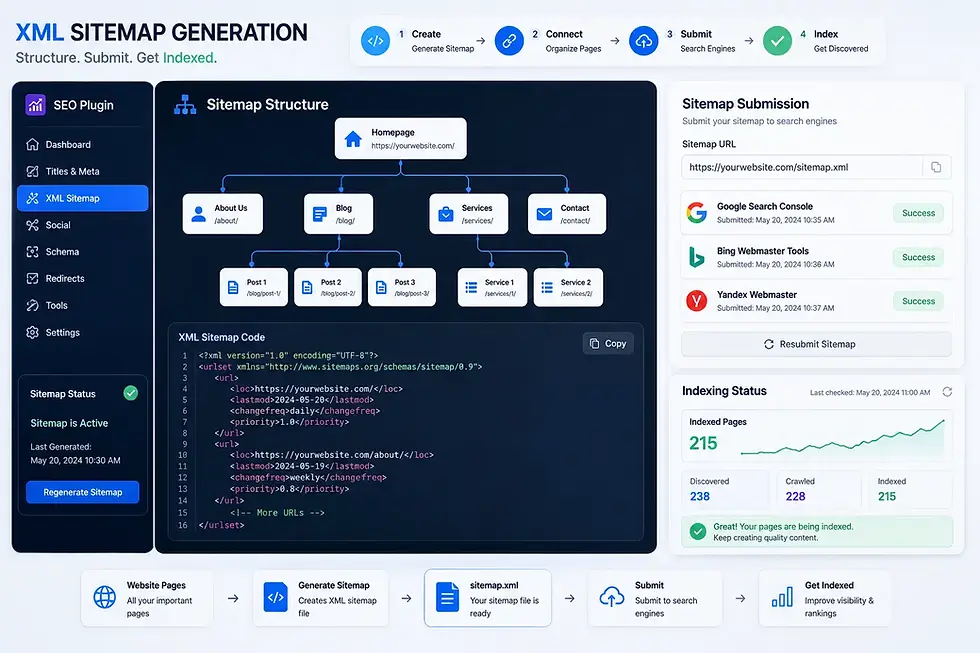
Submit and maintain an accurate XML sitemap.
Fix broken internal links and important crawl errors.
Use descriptive page titles and meta descriptions.
Build logical internal links between related articles.
Ensure your website works well on mobile devices & provides a usable experience.
Check that canonical tags and indexing directives are configured correctly.
Make essential information available as readable text rather than embedding everything in images.
Tools such as Google Search Console and Bing Webmaster Tools can help identify indexing problems and monitor search performance.
Why it matters: If search systems cannot reliably discover or access your important content, the quality of that content alone may not be enough to earn visibility.
Create Content That Directly Answers Real Questions
AI search users often ask detailed, conversational questions rather than entering short keywords. For example, instead of searching only for “password managers,” a user might ask, “Which password manager is suitable for a small business with remote employees?”
Your content should address these specific information needs. A practical approach is to build articles around questions your audience asks before making a decision.
These might include:
What is the technology, and how does it work?
Which problem does it solve?
What are its advantages and limitations?
How does it compare with alternatives?
What should users consider before choosing a solution?
Which common mistakes should they avoid?
Answer the main question early in the article, then provide supporting explanations, examples, and relevant details. Avoid stretching a simple answer into a lengthy introduction.
Practical tip: Review customer support questions, search queries, community discussions, product reviews, and relevant forums to identify real questions worth answering.
Publish Original Insights Instead of Rewriting Existing Content
One of the strongest ways to differentiate your brand is to publish information that readers cannot easily find repeated across dozens of other websites. If every article in your industry repeats the same definitions, generic advice, and manufacturer claims, your content has little distinctive value.
Instead, incorporate original contributions such as:
First-hand testing and documented observations.
Original surveys or research.
Comparisons based on clearly explained criteria.
Real examples and case studies.
Screenshots, diagrams, and demonstrations.
Expert commentary supported by evidence.
Practical troubleshooting steps based on genuine experience.
Unique data or findings relevant to your audience.
For example, A software publisher could compare workflows using transparent test conditions rather than merely repeating feature lists.
Google's guidance for generative AI search emphasizes valuable, unique content rather than content that simply repeats information already available elsewhere.
Build Topical Authority Around Your Industry
A single article rarely establishes a brand as a reliable source across an entire subject. A more sustainable strategy is to develop a connected collection of useful resources around your core expertise.
For example, a technology website covering cybersecurity might publish content about:
Password security and authentication.
Malware, phishing, and ransomware.
Network security and encryption.
Privacy tools and data protection.
Security software comparisons.
Practical security tutorials.
Emerging cybersecurity threats.
These articles should address distinct questions while linking naturally to related resources. A well-organized topical cluster helps readers explore a subject in depth and makes the relationship between your pages clearer. It also gives search engines more context about the topics your website covers.
The goal is to become a dependable resource for a defined subject, not to publish an article for every conceivable keyword.
Make Your Content Easy to Understand and Reference
Well-structured content helps people find information quickly and can make relevant passages easier for search systems to retrieve and interpret.
Use a clear information hierarchy:
One descriptive H1 for the article title.
H2 headings for major sections.
H3 headings for relevant subsections.
Short, focused paragraphs.
Bulleted lists for related points.
Tables for meaningful comparisons.
Numbered steps for processes and tutorials.
Descriptive labels for images, charts, and diagrams.
For example, an article about 2FA should clearly explain what it is, how it works, which methods are available, and what limitations users should understand.
Strengthen Your Brand's Digital Identity
AI systems need to associate names, products, organizations, and topics with the correct information. A consistent brand identity helps reduce ambiguity.
Make sure your website clearly communicates:
Your official brand name.
What your company does.
Which products or services you offer.
Who your intended audience is.
How users can contact you.
Who creates or reviews your content, where relevant.
Which organization operates the website.
Maintain consistent company descriptions across your official website, business profiles, social media accounts, and relevant industry directories. For businesses, accurate listings on appropriate platforms can also help users verify basic information.
Earn Relevant Mentions and Citations From Trusted Sources
Your own website is only one part of your brand's online presence. Industry publications, reputable news outlets, specialist websites, professional organizations, and independent reviewers can provide additional context about your company.
Focus on earning relevant coverage through genuine contributions, such as:
Publishing research that journalists and industry writers can reference.
Sharing expert commentary on relevant developments.
Contributing useful guest articles to reputable publications.
Participating in legitimate industry discussions.
Building partnerships with relevant organizations.
Making original data and research available to the public.
Earning honest product reviews and editorial coverage.
Focus on relevance and credibility rather than the number of mentions. Avoid fabricated reviews, artificial brand mentions, or mass-produced guest posts to manipulate search systems, as these can undermine trust and violate platform policies. Also, don't assume that every external mention will influence AI recommendations.
Use Structured Data Correctly
Structured data, such as supported Schema.org markup, helps search engines interpret certain information about a webpage.
Depending on the page and its purpose, relevant structured data may describe:
An organization
A product
An article
A person or author
A software application
A breadcrumb trail
For example, accurate Organization markup can help communicate your company's name and other details. Product markup can describe information such as a product's name, price, and availability when the page meets the applicable requirements.
Important: Structured data is not a shortcut to AI citations. Google states that there is no special schema markup or additional technical requirement specifically needed to appear in AI Overviews or AI Mode.
Keep Important Information Accurate and Up to Date
Outdated information can damage trust and make your content less useful when users need current answers.
Review pages where facts change frequently, including:
Software pricing and subscription plans.
Product specifications and compatibility.
Security recommendations.
Laws, regulations, and compliance requirements.
Product availability and support status.
Industry statistics and market developments.
When updating a page, verify the underlying information instead of changing the publication date without making meaningful improvements. Cite primary sources for important claims, and explain uncertainty where reliable evidence is incomplete.
For technical articles, distinguish between established facts, informed interpretations, and predictions.
Monitor AI Search Visibility and Improve Based on Evidence
Start with tools that provide actual data about your website.
Google Search Console: Monitor search impressions, clicks, queries, and page performance. Where dedicated generative AI reporting is available in your account, use it to evaluate the relevant AI search visibility metrics.
Bing Webmaster Tools: Its AI Performance reporting provides insights into citations across supported Microsoft AI experiences, including Copilot and AI-generated answers in Bing. You can examine cited pages, citation activity, and sample grounding queries.
Analytics tools: Track referral traffic, engagement, leads, and sales from identifiable AI-related referral sources. Not every AI-driven visit will be attributed clearly, so treat referral data as incomplete rather than a full picture.
Manual brand monitoring: Test a consistent set of relevant questions across AI search platforms. Record whether your brand appears, whether your website is cited, which competitors are mentioned, and whether the information is accurate.
AI answers can vary by wording, location, personalization, model, and time. Do not treat a single successful or unsuccessful response as definitive evidence of your overall visibility.
How to Measure AI Search Brand Visibility
Consider tracking several complementary metrics instead of relying on one overall visibility score.
Metric | What it tells you |
AI brand mentions | How often your brand appears in sampled AI answers |
Source citations | How often your pages are referenced as sources |
Cited URLs | Which pages are earning AI search visibility |
Relevant prompt coverage | Which questions or topics surface your brand |
Brand search demand | Whether more users are searching for your brand |
Referral traffic | Whether identifiable AI experiences send visitors |
Conversions | Whether those visitors generate leads or sales |
Accuracy of mentions | Whether AI answers describe your brand correctly |
Some metrics can be measured directly through platform reporting, while others require manual tracking or analytics.
Common Mistakes to Avoid When Optimizing for AI Search
Several misconceptions can lead businesses to waste time or make unnecessary website changes.
Assuming AI Search Requires a Completely Different SEO Strategy
AI search introduces new discovery and measurement opportunities, but foundational SEO remains important. Crawlability, indexing, useful content, internal linking, and clear page structure are still valuable.
Publishing Large Volumes of Generic AI-Generated Articles
Using AI to research, organize, or assist with writing is not automatically a problem. The risk comes from publishing large quantities of low-value content that adds little original information or usefulness. Review AI-assisted content for accuracy, originality, clarity, and genuine value before publishing.
Adding Special AI Files or Schema Without a Clear Purpose
Do not assume that an llms.txt file, custom schema, or a particular technical trick is required to appear in AI answers. Follow documented requirements from the platform you are targeting and prioritize verified best practices.
Keyword Stuffing and Repeating the Brand Name
Repeating your company name unnaturally does not establish credibility. Explain what your brand does, publish relevant information, and maintain a consistent identity instead.
Chasing Mentions Without Building Trust
A brand mention is not automatically a positive recommendation. Misleading claims, poor product quality, inaccurate information, and inconsistent company details can weaken the trust you are trying to build.
Expecting Immediate Results
Crawling, indexing, content evaluation, and AI answer selection can take time and vary between platforms. There is no guaranteed timeline for earning mentions or citations.
A Practical 30-Day Plan to Improve AI Search Visibility
If you are starting from scratch, use this four-week plan to focus on the highest-value tasks first.
Week 1: Audit Your Website
Check important pages in Google Search Console and Bing Webmaster Tools.
Review indexing, crawlability, sitemap health, and internal links.
Identify outdated pages and confusing brand information.
Establish a baseline using a small set of relevant AI-search questions.
Week 2: Improve Existing Content
Identify pages that already receive relevant search impressions.
Improve weak introductions and unclear headings.
Add direct answers to important questions.
Verify factual claims and link to authoritative sources.
Include original examples, useful comparisons, or other distinctive value where possible.
Week 3: Strengthen Brand and Topic Coverage
Build or improve your main brand, product, or service pages.
Publish supporting articles around your core expertise.
Add useful internal links between related resources.
Review business profiles and relevant external listings for accuracy.
Identify legitimate opportunities for industry coverage and original research.
Week 4: Measure and Refine
Repeat your initial AI-search prompt tests.
Review citation and performance reports available in webmaster tools.
Identify pages and questions where competitors appear more often.
Prioritize improvements based on evidence rather than assumptions.
Create a recurring schedule for reviewing important content and tracking results.
Thirty days is enough to establish a process and identify improvement opportunities, but it is not a promise of AI citations, higher rankings, or additional sales.

Key Takeaways
Improving brand visibility in AI search engines is not about discovering a secret prompt, adding a special file, or manipulating a new ranking algorithm. It is about making your brand easier to discover, understand, verify, and reference when people ask relevant questions. Build a strong SEO foundation, publish original and accurate content, explain your expertise clearly, maintain consistent brand information, and earn genuine recognition across relevant sources. Then measure your progress using available platform reports, analytics, and consistent AI-search tests.
AI search will continue to evolve, so the most durable strategy is to build a website that deserves to be discovered, not one that relies on short-lived optimization tricks.
Editorial Sources
The following official resources were consulted while preparing this article:
Google Search Central: Guide to AI features and search optimization
Google Search Central: AI Overviews, AI Mode, and your website
Microsoft Bing Webmaster Blog: Introducing AI Performance in Bing Webmaster Tools
Author: Kalyan Bhattacharjee
Category: SEO & Marketing | Tech Tutorials | AI Insights
Expertise: Technology Analyst & Digital Research Writer | 5+ Years of Experience
Source: Research-based content using publicly available technical resources and industry references
Frequently Asked Questions About AI Search Brand Visibility
Find clear answers to common questions about AI search visibility, GEO, traditional SEO, brand mentions, and strategies for getting your content cited by AI-powered search engines.
What is the best way to improve brand visibility in AI search engines?
Ans: Start with a technically accessible website, create original and useful content that directly answers audience questions, strengthen your brand identity, and build credibility through relevant external coverage. Monitor AI citations and referral traffic where reliable reporting is available.
Does traditional SEO still matter for AI search?
Ans: Yes, Google states that existing SEO best practices remain relevant to AI Overviews and AI Mode. Crawlability, indexing, helpful content, internal links, and accurate information continue to matter.
What is Generative Engine Optimization (GEO)?
Ans: Generative Engine Optimization, or GEO, is a term used for practices intended to improve a brand's visibility in generative AI responses. It generally includes useful content, clear information, technical discoverability, credible sources, and monitoring AI mentions and citations. The term does not describe a universal ranking system shared by all AI platforms.
Does structured data improve AI search visibility?
Ans: Structured data can help search engines interpret supported information about a page, but it does not guarantee inclusion in AI-generated answers. Implement appropriate markup accurately and follow the relevant platform documentation.
Should I create content specifically for ChatGPT, Copilot, or Google AI?
Ans: You can study the questions people ask on each platform, but avoid creating separate, repetitive pages solely for individual AI systems. Build useful content around genuine audience needs and make sure the website is discoverable through the relevant search infrastructure.
How can I check whether AI search engines mention my brand?
Ans: Test relevant questions across the platforms important to your audience, record brand mentions and cited URLs, and repeat the process consistently. Use Google Search Console, Bing Webmaster Tools, and analytics tools to supplement manual checks with available performance data.
How long does it take to improve AI search visibility?
Ans: There is no fixed timeline. Results depend on factors such as crawling, indexing, competition, content quality, the topic, and each platform's retrieval and response systems. Monitor progress over time instead of expecting immediate mentions.

Comments