
Internet vs Intranet: Key Differences Explained Simply (2026 Guide)

Updated: Sep 16
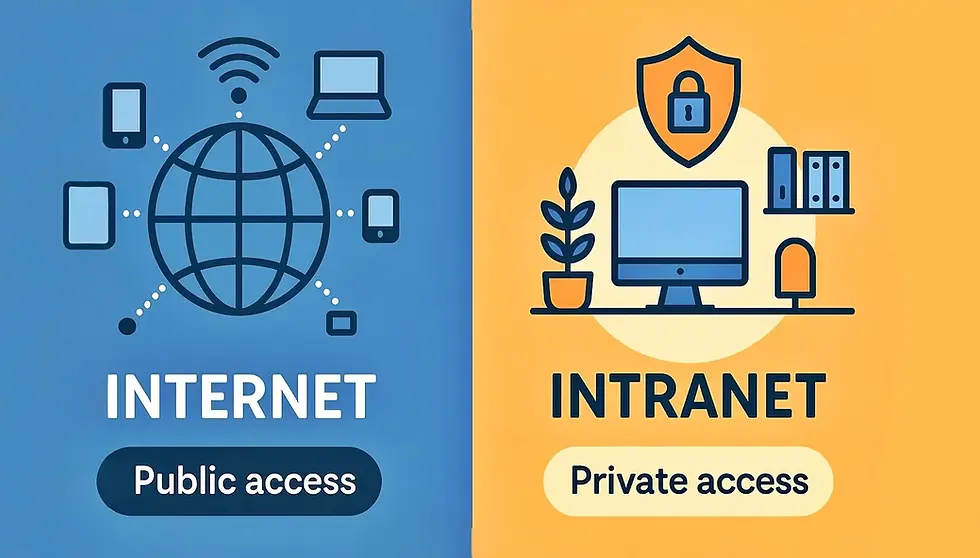
Overview | Internet vs Intranet
The internet and intranet are two commonly used terms in the world of technology, but they are quite different in nature. Understanding the difference between the two is essential for anyone who uses technology in their daily lives.
In this blog post, we will explore the differences between the internet and intranet and how they are used.
The Basics | Internet vs Intranet
While they might sound similar, they serve entirely different purposes. The Internet is a global network that connects billions of devices worldwide, enabling seamless communication and access to information. On the other hand, an Intranet is a private, internal network used within organizations to streamline communication, collaboration, and resource sharing.
What is the Internet?
The internet is a global network of networks that allows computers and other devices to communicate with each other. It is a public network, meaning that anyone with an internet connection can access it. The internet provides access to a vast range of resources, including websites, email, social media, online shopping, and more. It has revolutionized the way we communicate, access information, and conduct business.
What is an Intranet?
An intranet is a private network that is used within an organization to share information and resources. It is similar to the internet, but it is accessible only to authorized users within the organization. The intranet is often used to improve communication, collaboration, and efficiency within a company. It may include features such as company news, employee directories, document sharing, and more.
Differences between Internet and Intranet 🧩
The Internet and Intranet may sound similar, but they serve very different purposes. Here’s a simple breakdown to help you understand how each works and where they’re used:
Accessibility – Who Can Use the Network?
The internet is accessible to anyone with an internet connection, allowing global communication and access to limitless information. In contrast, an intranet is restricted to authorized users within an organization, offering a secure space for internal collaboration and data sharing.
Content – What Information Is Available?
The internet provides access to a vast range of resources, including websites, social media, and online shopping - while an intranet is limited to the content and resources of the organization. This makes the internet ideal for broad research and public communication, while intranets excel at delivering company-specific tools, documents, and internal information.
Security – How Protected Is the Network?
The internet is a public network, making it vulnerable to cyber attacks, while an intranet is a private network that is protected by various security measures. Intranets are typically more secure as they are isolated from external access, while the Internet, being public, requires robust cybersecurity measures to protect data.
Purpose – Why Are These Networks Used?
The internet is used for a variety of purposes, including communication, entertainment, and commerce, while an intranet is used primarily for internal communication and collaboration within an organization.
Connectivity – How the Networks Are Built
The internet connects multiple networks across the globe, forming a vast, public digital infrastructure. On the other hand, an intranet relies on local or internal servers to create a closed network environment, ensuring tighter control over data flow and user activity.
Cost – What Does It Take to Access the Network?
Access to the internet is typically provided by internet service providers and is often a paid service, while an intranet is usually owned and managed by an organization and does not require any additional cost for access.
Quick Comparison Table | Internet vs Intranet
Here's a clean comparison chart:
Feature | Internet | Intranet |
Access | Public (anyone can access) | Private (restricted to organization) |
Control | No single owner (globally governed) | Owned and controlled internally |
Use Case | Browsing, social media, emails | Company documents, HR portals, CRM |
Security | Needs antivirus, firewalls, etc. | Safer but still needs internal control |
Examples | Google, YouTube, Facebook | School portal, company intranet site |
Lesser-Known Insight: Intranets Can Use the Internet
Yes! Intranets can run on top of the Internet but remain secure by using:
VPNs
Authentication systems
Encrypted URLs
Yes, and many do! Remote workers access their intranet over the Internet via secure VPNs.

Key Takeaways | Internet vs Intranet
In Summary, the internet and intranet are two distinct networks with different purposes and accessibility. The internet is a public network that provides access to a vast range of resources and is accessible to anyone with an internet connection. In contrast, the intranet is a private network used within an organization for internal communication and collaboration. Understanding the differences between the two is crucial for anyone who uses technology in their daily lives.
Frequently Asked Questions
Here are some common questions about the Internet and intranet, including their differences, uses, accessibility, and security.
What is the main difference between the Internet and an intranet?
Ans: The Internet is a global public network accessible to people worldwide, while an intranet is a private network designed for use within an organization.
Is an intranet connected to the Internet?
Ans: An intranet can be connected to the Internet, but access to its internal resources is usually restricted to authorized users through authentication, firewalls, VPNs, or other security controls.
Is the Internet more secure than an intranet?
Ans: Security depends on how each network is designed, configured, and managed. An intranet can provide tighter access control because it is restricted to authorized users, but it can still face threats such as malware, phishing, insider risks, and unauthorized access.
What is an intranet commonly used for?
Ans: Organizations commonly use intranets for internal communication, employee resources, document sharing, company policies, announcements, collaboration, and internal applications.
Can an intranet be accessed from outside the organization?
Ans: Yes. An organization can allow remote employees to access an intranet using technologies such as a VPN, secure remote access, or identity-based authentication, depending on its network architecture and security policies.
Author: Kalyan Bhattacharjee
Category: Cybersecurity | Network & Internet
Expertise: Digital Creator, Tech Reviewer & Content Specialist
Source: Research-based content using publicly available networking standards and technical references
📚 Keep exploring - Here are more tech blogs you’ll love:


Comments