
The Future of AI-Powered Marketing: How Nano Banana Pro Elevates Branding with Cinematic Images

Updated: Sep 18
Introduction | Nano Banana Pro
As the digital landscape continues to evolve, marketers are constantly looking for new ways to strengthen their brands and capture attention in an increasingly competitive environment. Traditional advertising methods alone are often not enough to keep up with audiences who expect more engaging, visually rich content. To stand out, brands need visuals that are not only high-quality but also consistent, memorable, and capable of communicating a story.
This is where AI-powered creative tools are changing the way marketers approach visual content. Nano Banana Pro, combined with InVideo's video creation and editing capabilities, gives marketers new ways to turn ideas into polished visual content without relying entirely on traditional production workflows.
Nano Banana Pro + InVideo: A New Approach to Cinematic Branding
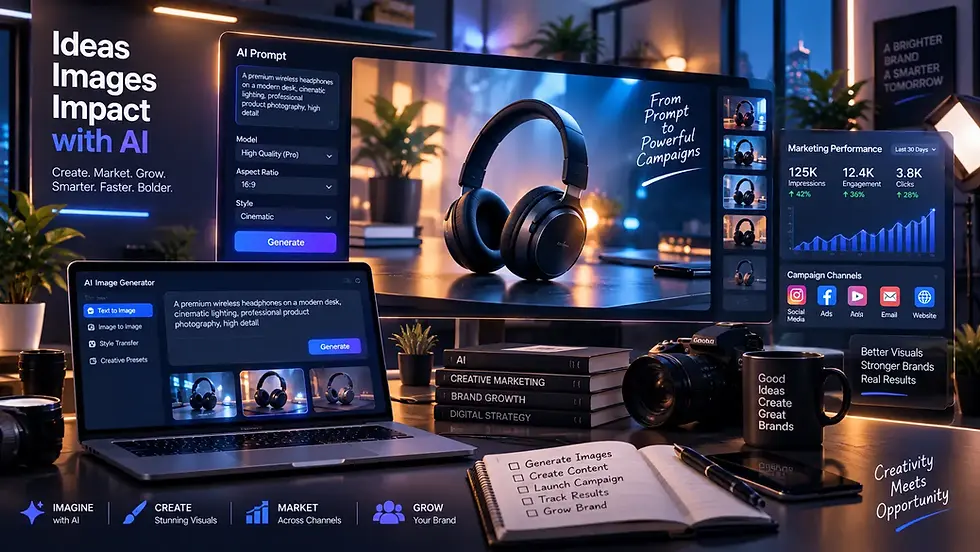
AI image generation has become an increasingly useful part of modern content creation. Tools such as Nano Banana AI by InVideo allow users to create detailed visuals from text prompts, making it easier to explore creative concepts and develop campaign assets. Nano Banana Pro, powered by Google's Gemini technology, is designed to provide greater control over the visual output, including elements such as composition, lighting, subject placement, and overall style.
When these generated visuals are combined with InVideo's video creation tools, marketers can move from a single visual concept to a complete piece of video content more efficiently. The combination creates an interesting workflow: generate the visual concept, refine the imagery, and then turn those visuals into engaging video content.
AI-Generated Cinematic Imagery for Modern Branding
Visual storytelling has always been an important part of marketing. A product image, advertisement, website banner, or social media post can communicate a brand's personality before a customer reads a single word. Traditionally, producing high-quality campaign imagery could involve photographers, designers, locations, equipment, and lengthy production schedules. AI image generation introduces another option for creating and testing visual concepts.
With Nano Banana AI by InVideo, marketers can describe a desired scene through a text prompt and generate visuals suited to a particular campaign or creative direction. Whether the concept involves an aspirational lifestyle scene, a product placed in an imaginative environment, or an abstract idea represented visually, AI-generated imagery can help marketers explore possibilities much faster.
Professional-Looking Visuals Without Traditional Production
One of the biggest advantages of AI-generated imagery is the ability to experiment without organizing a complete photo or video shoot for every concept. Marketers can explore different compositions, environments, lighting styles, and creative directions before deciding which visual approach works best for a campaign. This can be particularly useful during the early stages of content development, when multiple ideas need to be tested quickly.
However, AI-generated content still benefits from human creative direction. The quality of the final result depends not only on the generation tool but also on the prompt, brand guidelines, editing, and judgment of the person creating the content.
How InVideo Turns AI Images Into Marketing Content
Creating an impressive image is only one part of modern digital marketing. Brands also need content that can work across platforms such as Instagram, YouTube, websites, and digital advertising campaigns. This is where InVideo's video creation capabilities complement AI-generated imagery. Generated images can be incorporated into video projects and combined with elements such as transitions, text, music, narration, and other visual assets.
Instead of treating an AI-generated image as a standalone piece of content, marketers can use it as part of a broader visual story. For example, a collection of product or lifestyle images can become a short promotional video, social media advertisement, product presentation, or branded campaign.
From Static Visuals to Complete Stories
The combination of AI imagery and video editing can also simplify the process of developing a consistent visual narrative. Marketers can create a series of related visuals and then arrange them into a sequence that follows a particular message or campaign concept. This approach can help maintain a recognizable visual direction while adapting content to different formats.
The result doesn't have to be a large-scale commercial. The same workflow can be useful for short-form social content, promotional videos, product announcements, YouTube advertisements, and other digital campaigns.
AI Video Apps: Making Content Creation More Accessible
The growth of AI video apps has made video production more accessible to marketers, creators, and small businesses. Instead of depending entirely on traditional editing workflows, users can combine text prompts, images, templates, and automated tools to build video content. Apps such as InVideo can help simplify different parts of the process, from organizing scenes to adding visual and audio elements.
When AI-generated imagery is incorporated into this workflow, creators can move from an initial idea to a finished visual asset with fewer production steps.
Fast, Flexible, and Ready for Different Campaigns
Speed is particularly important in digital marketing. Trends can change quickly, and brands often need multiple versions of content for different audiences, platforms, or campaigns. AI-powered creative tools make it easier to experiment with different visual concepts and produce variations without starting every project from scratch.
This can be useful for seasonal campaigns, product launches, social media content, promotional offers, and other situations where marketers need fresh creative assets within a limited timeframe.
Why Cinematic Images Matter for Brand Identity
Consumers encounter an enormous amount of visual content every day. As a result, simply placing a product or message in front of an audience may not be enough to capture attention. Strong visual storytelling can help a brand communicate its personality and create a more memorable experience.
Cinematic imagery can contribute to this by using elements such as lighting, composition, depth, atmosphere, and perspective to create a particular mood. When these elements are applied consistently, they can also help establish a recognizable visual identity.
Creating Consistent Visuals at Scale
Consistency becomes particularly important when a brand is producing content across multiple channels. AI-generated imagery can help marketers explore a consistent creative direction across website graphics, advertisements, social media posts, and video content. Instead of relying on a limited collection of stock images, brands can develop visuals around specific concepts and campaign requirements.
Nano Banana AI by InVideo provides another way to approach this process, allowing marketers to experiment with detailed visual concepts while keeping the broader brand message in mind. That said, AI-generated visuals should still be reviewed carefully before publication. Brand guidelines, factual accuracy, product appearance, typography, and other important details may require human editing or verification.
The Future of Branding With AI-Powered Visuals
AI is changing the creative workflow, but its most important role may not be replacing traditional creativity. Instead, it can give marketers more tools to experiment, iterate, and bring concepts to life. As image and video generation technology continues to develop, marketers can expect greater control over visual details, more efficient content workflows, and new ways to adapt creative assets for different audiences. This could be particularly valuable for smaller businesses and independent creators that may not have access to large production teams.
AI-powered tools can reduce some of the barriers involved in developing professional-looking visual content and allow smaller teams to experiment with ideas that would previously have required greater resources. At the same time, human creativity remains essential. AI can generate and transform content, but marketers still need to determine what the brand should say, who it should speak to, and why the visual matters to the audience.

Conclusion
The rise of AI-powered image and video creation is giving marketers new ways to approach branding and visual storytelling. Tools such as Nano Banana AI by InVideo can help transform simple ideas into detailed visual concepts, while InVideo's video capabilities make it possible to incorporate those visuals into broader marketing campaigns.
From social media content and digital advertisements to product launches and branded videos, this combination can make visual content creation more flexible and accessible. As the technology continues to evolve, the strongest results are likely to come from combining AI's speed and creative possibilities with human strategy, storytelling, and brand direction.
Frequently Asked Questions About Nano Banana Pro
Here are some common questions about Nano Banana Pro, AI-generated visuals, InVideo, and their role in modern marketing.
What is Nano Banana Pro used for?
Ans: Nano Banana Pro can be used to generate and refine AI-powered images from text-based instructions. Marketers and creators can use generated visuals for concepts such as advertisements, social media content, product imagery, and other creative projects.
Can Nano Banana Pro create marketing images?
Ans: Yes, AI image-generation tools can be used to create marketing visuals for different campaigns and creative concepts. However, generated content should be reviewed and edited where necessary to ensure it matches the brand's requirements.
Can I use AI-generated images in videos?
Ans: Yes, AI-generated images can be incorporated into video projects and combined with elements such as text, transitions, music, narration, and other media. This can help turn static visuals into promotional or storytelling content.
Are AI-generated visuals suitable for branding?
Ans: They can be, particularly when they are created around clear brand guidelines and reviewed by a human. Consistent visual direction, accurate product representation, appropriate messaging, and final editing are important when using AI-generated content commercially.
Will AI replace traditional marketing and creative teams?
Ans: AI can automate or simplify parts of the creative process, but it does not eliminate the need for marketing strategy, creative direction, brand positioning, and human judgment. In many workflows, AI works best as a tool that helps creative teams produce and test content more efficiently.


Comments